Lv quan Environmental Protection Engineering Technology Co., Ltd.
  • Home
  • Product
    • Equipment
    • Engineering
    • Accessories
  • Solutions
    • Petrochemical Industry
    • Pharmaceutical, Chemical Industry
    • Coating Industry
    • Machinery Industry
    • Painting Industry
    • Electronics Industry
  • Capability
    • R&D
    • Service
    • Manufacture
  • About Us
    • certificate
    • Factory
  • News
    • Company News
    • Industry News
    • Exhibition News
  • Contact Us
Lv quan Environmental Protection Engineering Technology Co., Ltd.
  • Lv quan Environmental Protection Engineering Technology Co., Ltd. English
  • Lv quan Environmental Protection Engineering Technology Co., Ltd. русский
  • Lv quan Environmental Protection Engineering Technology Co., Ltd. Français
  • Lv quan Environmental Protection Engineering Technology Co., Ltd. Español
  • Lv quan Environmental Protection Engineering Technology Co., Ltd. عربى
Lv quan Environmental Protection Engineering Technology Co., Ltd.

Web Menu

  • Home
  • Product
    • Equipment
    • Engineering
    • Accessories
  • Solutions
    • Petrochemical Industry
    • Pharmaceutical, Chemical Industry
    • Coating Industry
    • Machinery Industry
    • Painting Industry
    • Electronics Industry
  • Capability
    • R&D
    • Service
    • Manufacture
  • About Us
    • certificate
    • Factory
  • News
    • Company News
    • Industry News
    • Exhibition News
  • Contact Us

Product Search

Language

  • Lv quan Environmental Protection Engineering Technology Co., Ltd. English
  • Lv quan Environmental Protection Engineering Technology Co., Ltd. русский
  • Lv quan Environmental Protection Engineering Technology Co., Ltd. Français
  • Lv quan Environmental Protection Engineering Technology Co., Ltd. Español
  • Lv quan Environmental Protection Engineering Technology Co., Ltd. عربى

Share

Exit Menu

  • Industry News
    Home / News / Industry News / What are the safety issues in Organic Waste Gas Treatment Engineering?

What are the safety issues in Organic Waste Gas Treatment Engineering?

Content

  • 1 Safety is the Non-Negotiable Foundation
  • 2 Primary Safety Hazards and Industry Data
  • 3 Critical Safety Engineering Measures
    • 3.1 1. Explosion Prevention & Protection
    • 3.2 2. Fire Prevention & Thermal Management
    • 3.3 3. Operational Integrity & Maintenance Protocols
  • 4 FAQ: Addressing Common Safety Concerns
    • 4.1 Q1: How do you ensure safety when treating waste gas with high VOC concentration spikes?
    • 4.2 Q2: What is the single most overlooked safety component?
    • 4.3 Q3: Can a system be truly “inherently safe” for explosive mixtures?
  • 5 Proven Safety Practices: A Case in Engineering Excellence

Safety is the Non-Negotiable Foundation

The most critical safety issues in organic waste gas treatment engineering revolve around explosion hazards, fire risks, and system instability. These risks stem from the inherent flammability of volatile organic compounds (VOCs) and the high-energy processes used to destroy them. A well-designed system must integrate inherent safety principles—including explosion relief, flame arrestors, temperature control, and real-time monitoring—to achieve both compliance and operational reliability. Data shows that over 80% of industrial accidents in this field are attributable to inadequate design or neglected preventive maintenance, making proactive safety engineering the single most effective investment.

Primary Safety Hazards and Industry Data

Understanding the specific risks is the first step toward mitigation. The table below summarizes the most common hazards along with illustrative data from industry incidents.

Table 1: Common safety hazards in organic waste gas treatment systems and associated incident data
Hazard Type Typical Cause Incident Rate (Industry Estimate)
Explosion (Dust/Gas) Concentration exceeding LEL, static discharge 35% of major incidents
Fire High-temperature oxidation, solvent accumulation 28% of major incidents
Chemical Exposure Leakage from corroded ducts or seals ~15% of reportable events
System Overpressure Blocked filters, failed control loops ~12% of operational failures

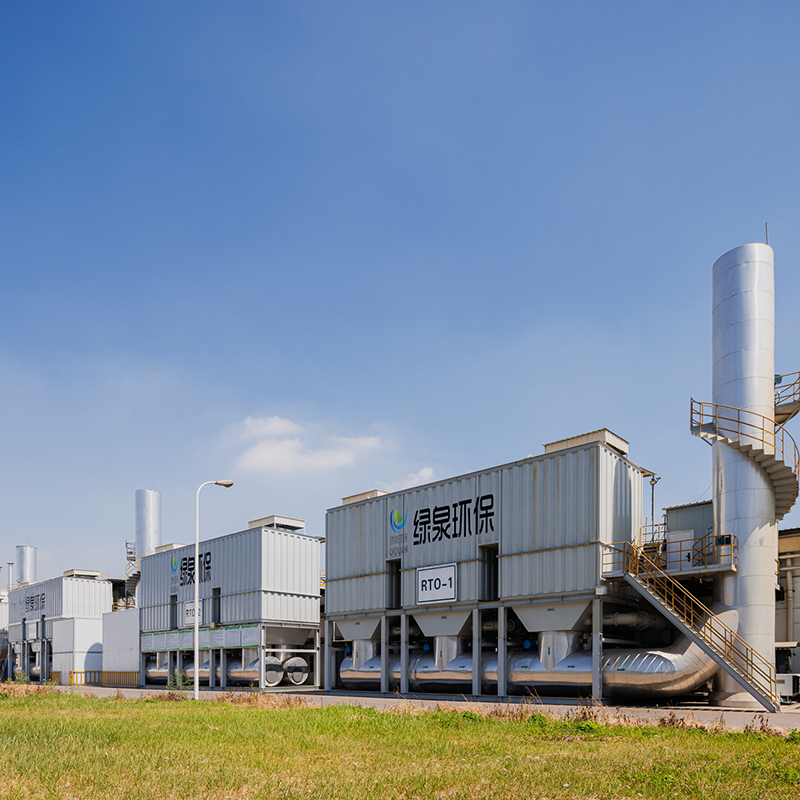
These figures underscore that without robust engineering controls, the financial and human toll can be devastating. For instance, a single explosion in a poorly designed RTO (Regenerative Thermal Oxidizer) can result in losses exceeding $2 million in equipment damage and downtime alone.

Critical Safety Engineering Measures

Effective safety engineering relies on a layered approach. Below are the core safety sub-systems that every organic waste gas treatment facility must incorporate.

1. Explosion Prevention & Protection

  • LEL Monitoring: Continuous Lower Explosive Limit monitoring with automatic interlock. Industry standard requires keeping concentration below 25% of LEL. If levels exceed this threshold, a nitrogen purge or bypass system must activate within milliseconds.
  • Flame Arrestors: Installed at all inlet and outlet points to prevent flashback. For high-risk applications, double-block-and-bleed valve arrangements are mandatory.
  • Explosion Relief Panels: Properly sized vents on oxidation units (e.g., RTO, catalytic oxidizers) allow pressure waves to dissipate safely, reducing structural damage by up to 90% during an unexpected deflagration.

2. Fire Prevention & Thermal Management

  • High-Temperature Shutdown: Multiple thermocouples with redundant logic controllers. If the combustion chamber exceeds a set limit (e.g., 950°C for most thermal oxidizers), the system automatically shuts down fuel supply.
  • Material Selection: Use of 304/316 stainless steel for ductwork and vessels where corrosive VOCs are present. Carbon steel is prone to accelerated corrosion that can lead to pinhole leaks and fugitive emissions.

3. Operational Integrity & Maintenance Protocols

According to operational data from more than 300 installed systems, over 60% of safety incidents occur during start-up, shut-down, or maintenance periods. Therefore, rigid lockout/tagout (LOTO) procedures and pre-startup safety reviews (PSSR) are essential.

  • Quarterly thermographic inspections to detect hot spots in electrical panels and reactors.
  • Monthly calibration of gas detectors—a 5% drift can lead to false negatives.
  • Annual pressure vessel recertification in accordance with local codes.

FAQ: Addressing Common Safety Concerns

Q1: How do you ensure safety when treating waste gas with high VOC concentration spikes?

Answer: For applications with fluctuating concentrations—common in industries like pharmaceuticals or printing—a dilution air system with a fail-safe buffer tank is deployed. This is combined with a high-speed LEL analyzer (response time <1 second). In practice, such systems have achieved 99.9% uptime without a single flame front incident in over 8 years of operation at a major European chemical facility.

Q2: What is the single most overlooked safety component?

Answer: The pre-treatment section. Many facilities focus on the oxidizer but neglect particulate removal. Accumulated dust inside ducts acts as fuel. Data from a study of 42 fire incidents showed that 74% originated in ductwork where pre-filters were inadequately maintained. Installing high-efficiency rotary filters and automatic cleaning mechanisms reduces this risk substantially.

Q3: Can a system be truly “inherently safe” for explosive mixtures?

Answer: While absolute zero risk is unattainable, inherent safety is achievable through design that eliminates the need for complex add-on protections. For instance, using adsorption wheel systems with integrated inert gas regeneration keeps the VOC concentration below 10% LEL at all times. This passive safety approach has been validated in applications handling acetone and ethanol mixtures up to 5,000 Nm³/h without any active safety system intervention required over a 10-year lifecycle.

Proven Safety Practices: A Case in Engineering Excellence

A leading coil coating plant in Jiangsu province, processing over 50,000 tons of coated steel annually, faced persistent safety challenges with their existing thermal oxidizer, which had experienced two minor fires in three years. After a comprehensive safety audit, the plant upgraded to a fully integrated system designed with the following features:

  • Dual-redundant LEL monitors with 500ms response time.
  • Automated purge cycle before every start-up, ensuring residual VOCs are below 10% of LEL.
  • Remote diagnostics and predictive maintenance via IoT sensors.

Results: Over 4 years of continuous operation, the facility recorded zero safety incidents, while insurance premiums decreased by 22%. This example illustrates that investing in advanced safety engineering not only protects personnel and assets but also yields a clear financial return.
Previous Post No previous article
Next Post How to balance the governance effect and energy consumption?

Related Products

  • LQ-RRTO Rotary heat-storage high-temperature incineration equipment

    LQ-RRTO Rotary heat-storage high-temperature incineration equipment

    Cat:Equipment

    Overview Of Tower-Type RTO Our company offers two types of rotary RTO, which are the rotary RTO and the single barrel multi-valve RTO. The rotary RTO,...

    See Details
  • LQ-Direct-fired high-temperature incineration purification equipment (TO furnace)

    LQ-Direct-fired high-temperature incineration purification equipment (TO furnace)

    Cat:Equipment

    Overview Direct combustion high-temperature incineration equipment, abbreviated as TO, utilizes the heat generated by the combustion of auxiliary fuel...

    See Details
  • LQ-CO Catalytic combustion equipment

    LQ-CO Catalytic combustion equipment

    Cat:Equipment

    Overview Catalytic combustion is a purification method that uses catalysts to oxidize and decompose combustible substances in exhaust gas at low tempe...

    See Details
  • LQ-ADW Zeolite Rotating Drum (Cylinder Type)

    LQ-ADW Zeolite Rotating Drum (Cylinder Type)

    Cat:Equipment

    Overview Of Variable Freouency Zeolite Turntable Our company's zeolite concentration turntable uses a combination of zeolite modules, with a high zeol...

    See Details
  • LQ-ACA Granular Activated Carbon Adsorption and Condensation Recovery System

    LQ-ACA Granular Activated Carbon Adsorption and Condensation Recovery System

    Cat:Engineering

    Overview The VOC-ACA series organic gas particle carbon purification and recovery equipment is used for the absorption, recovery, and reuse of organic...

    See Details
  • LQ-TT-CO Gas heat exchanger

    LQ-TT-CO Gas heat exchanger

    Cat:Equipment

    Product Introduction Gas heat exchanger is mainly used for energy saving and emission reduction industries in the waste heat recovery of flue gas in v...

    See Details
  • LQ-ADW-RTO zeolite rotor + RTO

    LQ-ADW-RTO zeolite rotor + RTO

    Cat:Engineering

    Concept Of Zeolite Wheel+RTO System Using zeolite wheel to adsorb organic waste gas, the low concentration and high air volume waste gas is concentrat...

    See Details
  • LQ-CF-CO Fixed Bed Zeolite Adsorption + Catalytic Oxidation (CO)

    LQ-CF-CO Fixed Bed Zeolite Adsorption + Catalytic Oxidation (CO)

    Cat:Engineering

    Concept Of Fixed Bed Zeolite + Catalytic Combustion As A Set Of Equipment The fixed bed zeolite + catalytic combustion device is suitable for the conc...

    See Details
  • LQ-ADW-TO Zeolite Rotary Concentrator (Cylindrical/Disc Type)+Thermal Oxidizer (TO)

    LQ-ADW-TO Zeolite Rotary Concentrator (Cylindrical/Disc Type)+Thermal Oxidizer (TO)

    Cat:Engineering

    The Concept Of Zeolite Wheel+ Direct Combustion High-Temperature Incineration Equipment The purpose of employing rotary drum zeolite adsorption for or...

    See Details
  • LQ-SWI Solid waste incineration furnaces

    LQ-SWI Solid waste incineration furnaces

    Cat:Equipment

    Overview Solid waste incineration furnaces are essential equipment in the management of solid waste, designed to transform waste materials into ash an...

    See Details
Categories
  • Equipment
  • Engineering
  • Accessories
Contact Us
Quick Links
  • Home
  • Product
    • Equipment
    • Engineering
    • Accessories
  • Solutions
    • Petrochemical Industry
    • Pharmaceutical, Chemical Industry
    • Coating Industry
    • Machinery Industry
    • Painting Industry
    • Electronics Industry
  • Capability
    • R&D
    • Service
    • Manufacture
  • About Us
    • certificate
    • Factory
  • News
    • Company News
    • Industry News
    • Exhibition News
  • Contact Us
News
  • The goods for the Cambodia project have been packed and are ready for shipment.
  • What are the safety issues in Organic Waste Gas Treatment Engineering?
Get In Touch

No.100 Central Avenue, South Economic NewArea, Gaoyou City, Jiangsu Province, China

E-MAIL : [email protected]

PHONE : +86-13382748801

TEL : +86-0514-84753397

MOBILE

Product Manual

Lv quan Environmental Protection Engineering Technology Co., Ltd.

Copyright © Lv quan Environmental Protection Engineering Technology Co., Ltd. All Rights Reserved.   Vocs Organic Waste Gas Treatment Engineering Equipment Manufacturer

Lv quan Environmental Protection Engineering Technology Co., Ltd.